.png)

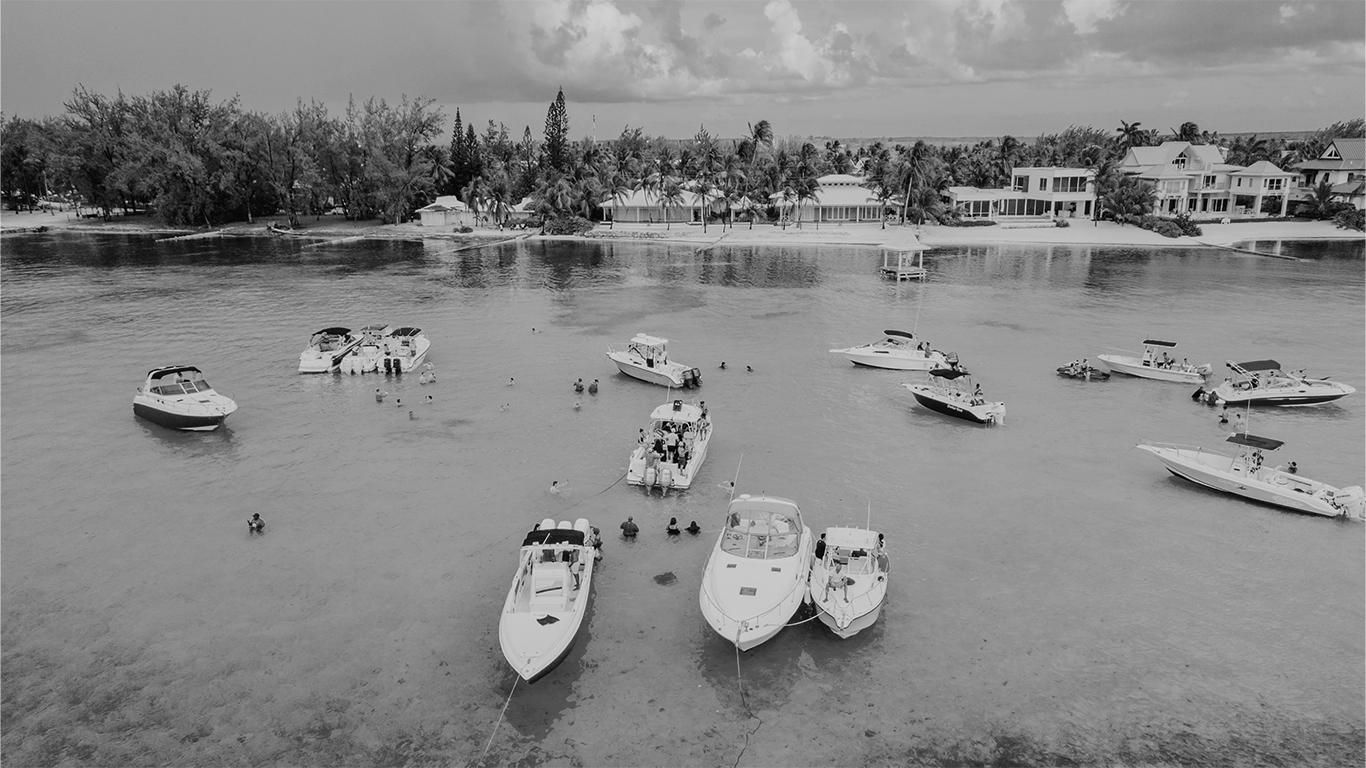
The Cayman Islands are a self-governing British Oversea Territory located in the north-west of the Caribbean, directly south of Cuba and northwest of Jamaica. There are three islands (Grand Cayman, Cayman Brac and Little Cayman), with Grand Cayman being the largest and main island and home to the financial services industry and all the law firms.
Grand Cayman is 480 miles south of Miami and is approximately 22 miles long and 8 miles wide at its widest point. The population of Grand Cayman as of 2025 is circa 70,000.
The topography of Grand Cayman is very different to the British Virgin Islands, with the latter being rugged and hilly while Grand Cayman is very flat. Grand Cayman is also a lot more developed in terms of infrastructure and service industries than the British Virgin Islands, which are more rustic.
Grand Cayman, particularly in the suburbs around the capital George Town and along the popular Seven Mile Beach corridor, is more akin to Florida in layout and appearance.
Grand Cayman enjoys an outstanding climate, with between seven and ten hours of sunshine per day, average daily high temperatures of 29C - 32C and average daily low temperature of 22C - 25C.
There are regular direct flights to several major North American cities including Miami (1.5 hours), New York (4 hours), Chicago (4 hours), Washington DC (3 hours) and Houston (3 hours), as well as Toronto (4 hours), Cuba (1 hour), Jamaica (1 hour), Panama (2 hours) and London (11 hours). Flights to the sister islands of Cayman Brac and Little Cayman take only 40 minutes.
The official language is English but the Cayman Islands are home to a vibrant mix of cultures, with more than 130 nationalities living and working across the three islands. While Jamaica and the Philippines continue to represent the largest expat groups among work permit holders, many others come from the United Kingdom, India, Canada, and the United States, reflecting the Islands’ diverse and global community.
Financial services dominate the economy, representing 30-33% of GDP, and Grand Cayman is a major global financial centre, ranking among the top 10 worldwide (often cited as 5th largest globally). The banking sector hosts over 280 banks managing USD 1.5 trillion in liabilities. It is home to 85% of the world’s hedge funds and over 10,500 mutual funds. It is the world’s second largest captive insurance domicile. Cayman’s economic success has developed as a result of its zero-tax environment, regulatory sophistication and proximity to the Americas, allowing it to act as a critical conduit for international capital flows.
Tourism forms the second economic pillar, attracting over 2 million visitors annually. The sector focuses on luxury markets and primarily attracts North American clientele.
Emerging sectors include Health City Cayman Islands, opened in 2014, developing medical tourism with state-of-the-art facilities. Cayman Enterprise City, a special economic zone created in 2011, attracts technology, finance, and education companies. The blockchain and digital assets sector is experiencing rapid development supported by adaptive legislation. Knowledge-based and technology activities are gaining ground, gradually diversifying the economy.
The economic success of the Cayman Islands allows its inhabitants to enjoy the highest standard of living in the Caribbean.
The Cayman Islands are a tax-neutral jurisdiction, with no income tax, corporation tax, property tax or inheritance tax.
The currency is the Cayman dollar which is pegged to the US dollar with 1 CI dollar equal to 1.25 US dollars or 1 US dollar equal to 0.8 US dollars. Both currencies are accepted on the island. Salaries are paid in US dollars.
The lifestyle in Grand Cayman is enviable, combining high quality accommodation with a superb climate. Most lawyers live in condominium complexes with shared pools, tennis courts, gyms and gardens, within a 15-20 minute drive of work.
The Cayman Islands are regarded as one of the world’s premier scuba diving locations because of the incredible clarity of the ocean waters, with some 160 dive sites situated around Grand Cayman alone. There are a wide range of other water sports activities on offer including kiteboarding), snorkelling, sailing, jet-skiing, fishing, wakeboarding and paddleboarding.
Grand Cayman has two golf courses and there are a large number of sporting leagues to participate in, including rugby, football, Gaelic football, hockey, basketball and American touch football. Tennis, cycling and running are also popular, with marathons, half-marathons and triathlons being held every year. There are a significant number of bars, restaurants, hotels and nightclubs, particularly along the Seven Mile Beach corridor.
Camana Bay is a very upscale outdoor shopping and entertainment complex, unrivalled in the Caribbean, mixing international boutiques, restaurants, and leisure spaces. It has proved to be very popular and attracts large numbers of people after work and on weekends.
George Town offers duty-free shopping, particularly for jewelry and spirits. The main supermarkets include Foster's, Kirk Market and Hurley's.
The Cayman Islands healthcare system combines quality public and private infrastructure with high medical standards and advanced technology. Mandatory health insurance guarantees healthcare access for all residents, though costs must be factored into your budget.
On Grand Cayman, George Town Hospital serves as the main public facility, while Doctors Hospital offers comprehensive private services. Health City Cayman Islands, located in East End, specialises in medical tourism and advanced specialist care. Numerous private clinics complete the care offering.
Apartments and condos dominate the rental market, from studios to spacious 3+ bedrooms. Many complexes offer pools, 24/7 security, and fitness facilities. Gated communities enjoy great popularity among expats, offering tranquility and services. Detached houses, townhouses, and luxury villas provide alternatives for families or larger budgets. Air conditioning equips all properties given the tropical climate. Construction adheres to strict hurricane-resistance standards, and parking is typically included.
There are no property taxes and no restrictions on foreign ownership of property by individuals.
Private vehicles prove practically essential in the Cayman Islands. Your foreign driver's license can generally be converted to a local permit through competent authorities. Roads are well-maintained on Grand Cayman. A public transport system exists but remains limited. Buses primarily serve George Town - Seven Mile Beach - West Bay routes. Variable frequency and restricted coverage make buses unsuitable for most daily travel, particularly work commuting. Taxis remain available but expensive. Cycling is possible but limited due to a lack of dedicated infrastructure and the hot climate discouraging long journeys.